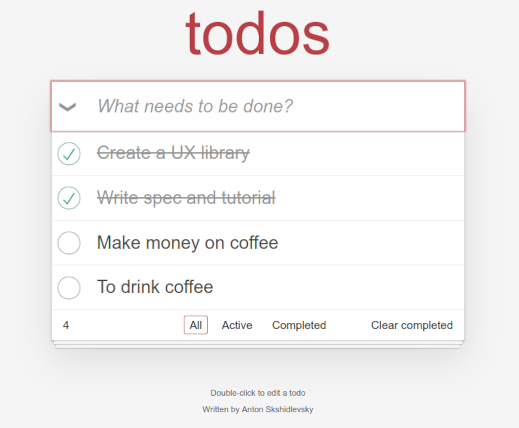
Tailwind CSS v4 was recently released, and with it came a problem when using the Shadow DOM. You can find the issue here: tailwindlabs/tailwindcss#15005.
Tailwind v4 uses @property to define defaults for custom properties. Currently, shadow roots do not support @property. Although it was explicitly disallowed in the spec, there is ongoing discussion about adding support: w3c/css-houdini-drafts#1085.
It is unknown if the developers will fix this issue. In this post, we will consider workarounds to address it.
In this post, I show a lightweight JavaScript approach to parsing a connection-string URI like a MongoDB connection string. The code breaks down the URI into its components, including the scheme, credentials, hosts, endpoint, and options.
Input:
mongodb://user:pass@host1:27017,host2:27017/db?option1=value1&option2=value2
Output:
{
  "scheme": "mongodb",
  "username": "user",
  "password": "pass",
  "hosts": [ { "host": "host1", "port": 27017 }, { "host": "host2", "port": 27017 } ],
  "endpoint": "db",
  "options": { "option1": "value1", "option2": "value2" }
}
I like to use simple, useful code of my own instead of using external libraries. So I prepared the URI parser in plain JavaScript; here it is.
JSON Web Token (JWT) is a popular standard for securely transmitting information between parties as a JSON object. They are commonly used for authentication and information exchange. While many libraries exist to handle JWTs, sometimes you might need or want to implement the core logic yourself using pure JavaScript, especially in environments like web workers or edge functions where dependencies might be limited.
This post demonstrates how to create and verify JWTs using the Web Crypto API available in modern browsers and Node.js (v15+). We’ll focus on the HS256 algorithm (HMAC with SHA-256).
RPC, short for Remote Procedure Call, is an efficient way to connect your frontend directly with backend functions. Rather than using traditional REST APIs with multiple endpoints, RPC lets you invoke server functionality using a concise and unified interface. In modern web development, this approach not only simplifies code but also leads to more modular and maintainable applications.
With RPC as a native JavaScript function, you can seamlessly manage different types of data transfers, whether you’re sending JSON objects, plain text, or even files. This post explores the key concepts behind native RPC implementation, offers examples for both client and server, and provides usage examples to demonstrate how the design can fit into real-world applications.
I like concise solutions in code with no external dependencies. Today I’m posting a simple code to control asynchronous task execution in JavaScript.
Dispatching tasks effectively is a common challenge in modern web applications. This post presents a Dispatcher class in JavaScript designed to manage asynchronous jobs within a bounded queue and respect a maximum number of concurrent tasks. The design allows for graceful error handling, retries, and queue management, making it ideal for scenarios such as saving data to a backend or batch processing.
For a long time, I wanted to create a full-fledged frontend library like Vue, React, or Solid. My previous attempt was LibUX — a class-based library that implemented component rendering with an EJS-like template syntax, along with support for state management, routing, and localization.
This year I took the time to design a more modern approach, and Neux was born. It provides functions for reactive state, DOM rendering, localization, and routing — usable with or without a bundler.
Neux, or Native Element UI eXtension, is a lightweight frontend library for building dynamic user interfaces using declarative element definitions and reactive signals to modify them. It leverages native JavaScript and browser APIs to minimize boilerplate, making it ideal for creating single-page applications (SPA) and custom web components.

Here are the main concepts behind Neux:
- No JSX, no compiler — works at runtime.
- Framework-agnostic, use any part of the library independently.
- Declarative wrapper around low-level DOM APIs without complex abstractions.
- Function-based reactivity with direct DOM manipulation, no virtual DOM.
- Built-in localization support for dynamic language adaptation.
- Easy integration with CSS modules, Tailwind CSS, and other styling solutions.
- Minimal bundle size (4 KB gzipped) with zero dependencies.
- Open source and available under the MIT license.
Documentation and demos are available on neux.dev.
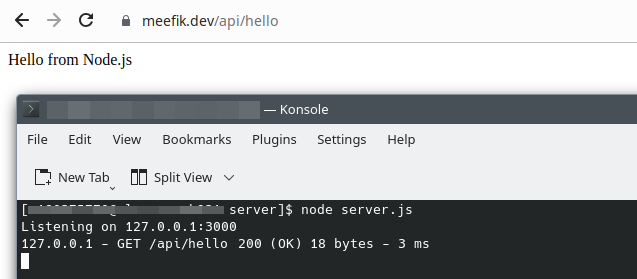
What if you really want a Node.js web server, but hosting is only available in PHP? Run Node.js on PHP web hosting! Bonus - web hosting is cheaper than VPS.
A typical web hosting stack is Linux + Apache + MySQL + PHP (LAMP). It does not have root rights and there is no way to replace the web server (Apache) with something else (Node.js). Sometimes there is access to the server via SSH, but it may not be.
What we will need:
- Web hosting with Apache and PHP.
- Ability to upload any files to the server.
- Ability to change Apache rules via
mod_rewrite.
- Ability to run arbitrary scripts on the server via
cron.
Sometimes you need to give your application user a more flexible way to search the database. The search should be universal for any data and easy to understand for a person without technical knowledge.
I was able to create a simple query syntax and a parser to convert them to MongoDB query syntax. Below is a description of the query syntax and the parser code for them.
I was thinking about template formats in JS frameworks and found the following options:
- Imperative creation of HTML elements in JS (native, but not convenient);
- HTML markup as text (text cannot be validated in the IDE);
- JSX markup (HTML tags inside JS code without quotes, syntactically incorrect in JS, but there is a layer for adaptation);
- HyperText (HTML elements via a function, syntactically correct in JS);
- Other less common options.
In one of my JS projects, I needed to implement UX interfaces in the Web SDK. Such a Web SDK was embedded on pages of third-party sites and for security reasons should not contain any external dependencies, including libraries like React. For these purposes, an own implementation of the UX framework was created, which can be embedded on the country of any site without problems and conflicts.
The code is implemented as a JS library and posted on GitHub under the MIT license. Build size - 12kb uncompressed (4kb gzipped).